
Individual identity is defined as the stable, internalized sense of who you are, including your values, beliefs, and emotional patterns, and research confirms it is the foundation of relationship health. Without a clear self-concept, people struggle to regulate emotions, set boundaries, or communicate honestly with partners. The psychological term for this capacity is differentiation of self, a concept from family systems theory that explains how a grounded sense of self protects both individuals and their relationships. The role of individual identity in relationship health is not a soft idea. It is measurable, and 2026 research backs it with hard data.
What is the role of individual identity in relationship health?
Differentiation of self is the ability to stay emotionally connected to a partner while remaining grounded in your own values and feelings. Murray Bowen’s family systems theory introduced this concept, and decades of research have confirmed its practical importance. A person with high differentiation can disagree with a partner without shutting down or exploding. They can be close without losing themselves.

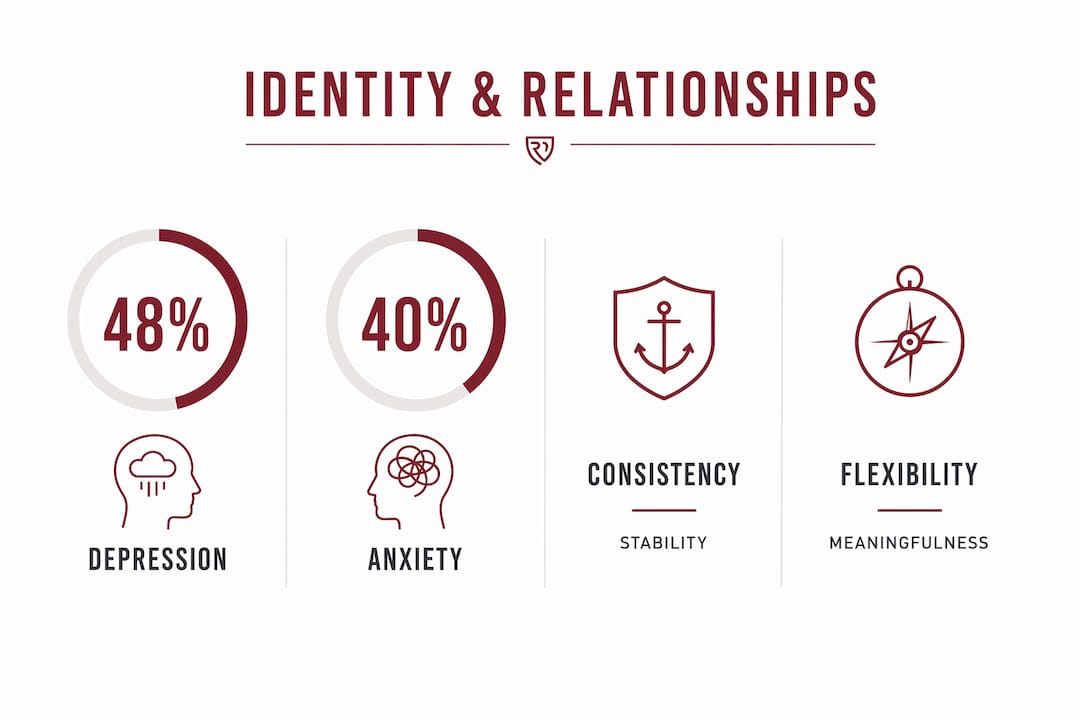
A 2026 study of 221 adults found that differentiation predicts up to 48% of the variance in depression and 40% in anxiety. That means nearly half of your vulnerability to depression in a relationship connects directly to how well you know and hold onto yourself. This is not a minor variable. It is one of the strongest predictors of psychological health in relational contexts.
The opposite of differentiation is emotional cut-off. That is when someone creates distance from a partner or family member to feel autonomous. It looks like independence, but it is actually a sign of poor self-definition. True differentiation means staying connected while staying grounded, not retreating.
Key signs of low differentiation include:
- Feeling responsible for your partner’s emotions
- Losing your opinions during conflict
- Needing constant reassurance to feel secure
- Withdrawing completely when disagreements arise
- Mirroring your partner’s moods without awareness
Pro Tip: Ask yourself after a heated conversation: “Did I say what I actually believe, or what I thought would keep the peace?” Your answer reveals a lot about your current differentiation level.
How does self-concept clarity influence impulse control and relationship dynamics?
Self-concept clarity is the degree to which your beliefs about yourself are consistent, stable, and clearly defined. It is distinct from self-esteem. You can feel good about yourself and still have a foggy, shifting sense of who you are. Clarity is about internal consistency, not self-approval.
A 2026 study of 113 young adults found that self-concept clarity accounts for 23% of the variance in impulse control. That is a significant finding. When you know who you are, you are less likely to react impulsively in conflict, make decisions that contradict your values, or cave to relational pressure.
Here is how self-concept clarity shows up in real relationship moments:
- During conflict: A person with high clarity stays focused on the issue. They do not spiral into “maybe I’m the problem with everything.”
- During decision-making: They can weigh a partner’s input without abandoning their own judgment.
- During stress: They maintain consistent behavior rather than shifting personalities based on who they are with.
- During intimacy: They can be vulnerable without fearing that closeness will erase their sense of self.
Identity clarity also affects relationship health indirectly through psychological flexibility and a sense of meaning in life. This means that a clear self-concept does not just help you behave better in relationships. It shapes how you interpret your relationships and whether they feel meaningful at all.
Pro Tip: Write three sentences that describe who you are without referencing your job, your relationships, or your achievements. If you struggle, that gap is worth exploring.
What is sexual self-concept and how does it affect marital satisfaction?
Sexual self-concept is a person’s internalized understanding of themselves as a sexual being. It includes dimensions like sexual self-esteem, sexual anxiety, sexual assertiveness, and sexual consciousness. Most people never examine this layer of identity, yet it has a direct and measurable impact on marital satisfaction.
A 2026 meta-analysis of 1,040 participants found that higher sexual self-concept is significantly and positively associated with marital satisfaction, with an effect size of 0.489 (P < 0.001). An effect size of 0.489 is considered moderate to large in behavioral research. That means sexual self-concept is not a peripheral factor. It is a central one.
| Dimension of sexual self-concept | Impact on relationship |
|---|---|
| Sexual self-esteem | Increases confidence in expressing needs |
| Sexual assertiveness | Supports honest communication with partner |
| Sexual anxiety | When high, reduces intimacy and satisfaction |
| Sexual consciousness | Builds awareness of personal desires and limits |
Couples who address sexual self-concept directly report improvements in both emotional and psychological well-being. This is because sexual identity intersects with vulnerability, trust, and communication. When one partner carries shame or confusion about their sexual self, it creates distance that neither person may be able to name.
Practical ways sexual self-concept contributes to relationship well-being include:
- Communicating desires clearly rather than hoping a partner guesses
- Recognizing and naming discomfort without shutting down
- Separating personal worth from sexual performance
- Approaching intimacy as a shared experience rather than an evaluation
How do you cultivate individual identity for healthier relationships?
Identity is dynamic, built through ongoing choices and relational commitments rather than discovered as a fixed “true self.” This is a critical reframe. You are not looking for who you already are. You are actively constructing who you become. That process never ends, and it directly shapes the quality of your relationships at every stage.
Self-reflection is the starting point. Journaling, therapy, and structured self-inquiry all build the internal clarity that supports better relational behavior. The goal is not to become self-absorbed. It is to know yourself well enough that you can show up fully for another person without disappearing into them.
Boundary setting is the practical expression of identity in relationships. A boundary is not a wall. It is a statement of what you need to remain emotionally present. People who cannot name their limits often become resentful, withdrawn, or controlling, not because they are bad partners, but because they have no other language for their discomfort.
Focusing on your own mental health benefits relationships by improving communication, modeling healthy behavior, and creating a safe space for growth. Individual self-work is not selfish. It is one of the most direct investments you can make in a partnership.
Pitfalls to avoid:
- Confusing emotional cut-off with healthy independence
- Using self-focus as a reason to avoid relational accountability
- Treating identity work as a one-time project rather than an ongoing practice
- Expecting a partner to validate your identity instead of building it internally
Pro Tip: Schedule one hour per week that belongs entirely to you, with no partner involvement. Use it for something that reflects your values or interests. Over time, this practice builds the internal groundedness that personal growth in relationships depends on.
Key Takeaways
A clear, differentiated sense of self is the single most reliable predictor of both psychological health and relationship satisfaction, and it is built through deliberate, ongoing identity work.
| Point | Details |
|---|---|
| Differentiation predicts mental health | Differentiation of self accounts for up to 48% of variance in depression and 40% in anxiety. |
| Self-concept clarity reduces impulsivity | A stable self-concept accounts for 23% of impulse control variance, directly improving conflict behavior. |
| Sexual self-concept matters | A meta-analysis found an effect size of 0.489 linking sexual self-concept to marital satisfaction. |
| Identity is built, not found | Identity evolves through choices and commitments, making ongoing self-reflection a relationship skill. |
| Self-work benefits both partners | Individual mental health work improves communication and creates relational safety for both people. |
What I’ve learned after years of watching identity collapse in relationships
The clients who come to me are not struggling because they chose the wrong partner. They are struggling because they lost themselves somewhere along the way, often long before the relationship began. High-achieving executives are especially vulnerable to this. They build an identity around performance and output, and when that identity enters a relationship, it has no language for vulnerability, need, or rest.
What I see repeatedly is that the relationship becomes the mirror for an identity crisis that was already there. The conflict, the distance, the chronic dissatisfaction: these are symptoms. The root is almost always a fragmented or misaligned sense of self. And here is what most people miss. You cannot fix a relationship problem that is actually an identity problem by working on the relationship alone.
The differentiation of self research confirms what I have observed directly. Higher differentiation levels predict better psychological health and greater relationship satisfaction. The work is internal first. The relationship improves as a result, not the other way around.
Identity work is not a phase. It is a practice. The people who sustain the best relationships are not the ones who found themselves once and stopped. They are the ones who keep asking the hard questions, keep adjusting, and keep choosing who they want to be. That kind of self-awareness in relationships is not passive. It is the most active thing you can do for the people you love.
— Rock
How I support identity and relationship well-being
I work specifically with high-performing individuals who sense that something is misaligned beneath the surface of their success and their relationships. The work goes deeper than communication strategies or conflict scripts.
My RECONSTRUCTION METHOD targets the root-level self-concept issues that drive chronic stress, relational breakdown, and the quiet sense that something is missing. Clients report a 90% reduction in anxiety following a session. If you recognize yourself in the patterns described in this article, I offer a structured path toward clarity, grounded identity, and relationships that actually work.
FAQ
What is differentiation of self in relationships?
Differentiation of self is the ability to stay emotionally connected to a partner while remaining grounded in your own values and feelings. Research from family systems theory shows it is one of the strongest predictors of both psychological health and relationship satisfaction.
How does self-concept clarity affect relationship behavior?
A stable self-concept reduces impulsive reactions and supports consistent, values-based behavior during conflict and stress. A 2026 study found self-concept clarity accounts for 23% of variance in impulse control among young adults.
What is sexual self-concept and why does it matter in marriage?
Sexual self-concept is a person’s internalized sense of themselves as a sexual being, including dimensions like self-esteem, assertiveness, and anxiety. A 2026 meta-analysis of 1,040 participants found it has a statistically significant positive association with marital satisfaction, with an effect size of 0.489.
Is identity fixed or can it change over time?
Identity is dynamic and built through ongoing choices and relational commitments rather than discovered as a fixed trait. Practitioners in positive psychology emphasize that identity construction is a lifelong process.
How does individual identity work improve a relationship?
Focusing on your own mental health improves communication, models healthy behavior, and creates a safer relational space for both partners. Identity clarity also affects relationship health through psychological flexibility and a stronger sense of meaning in life.